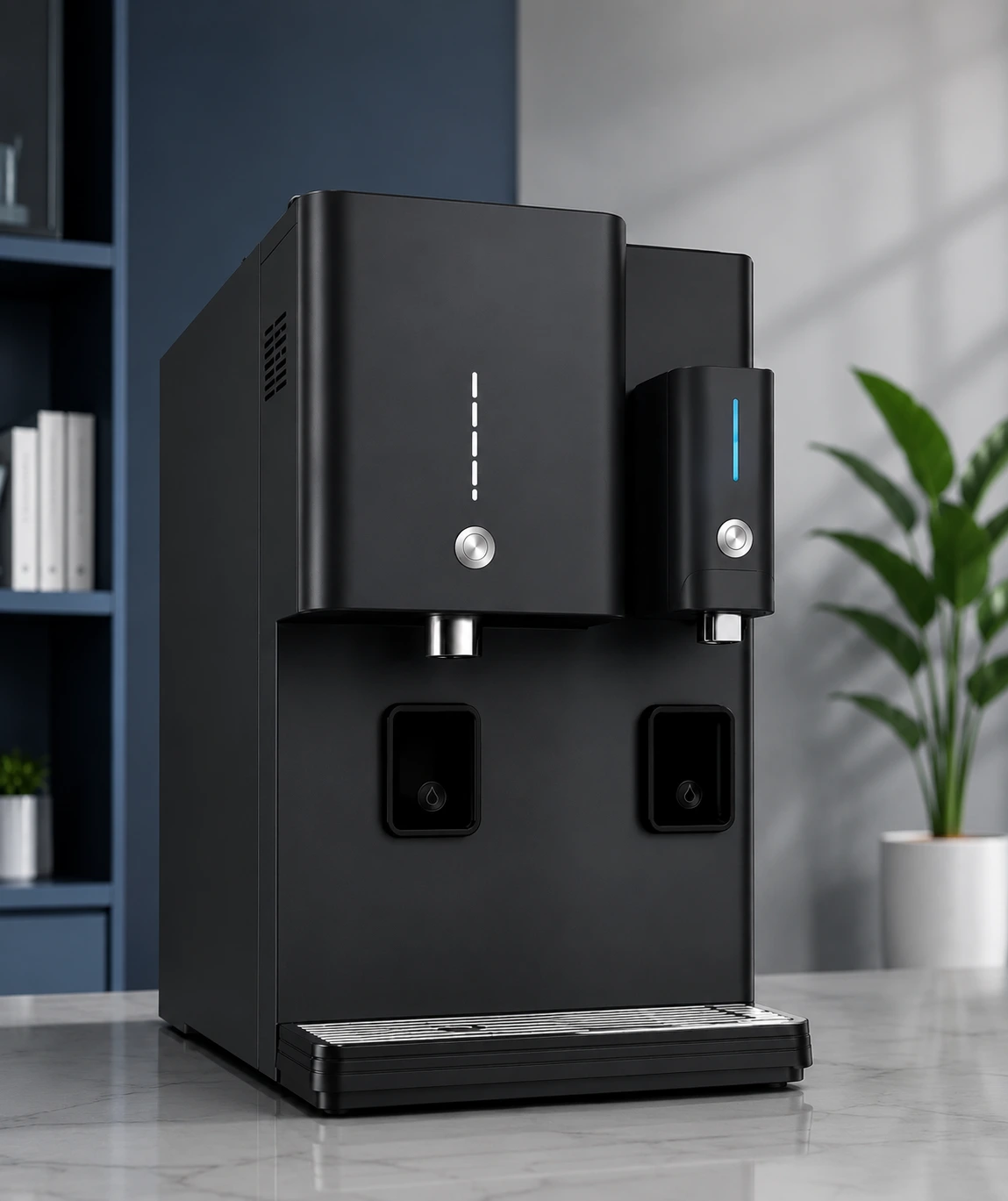
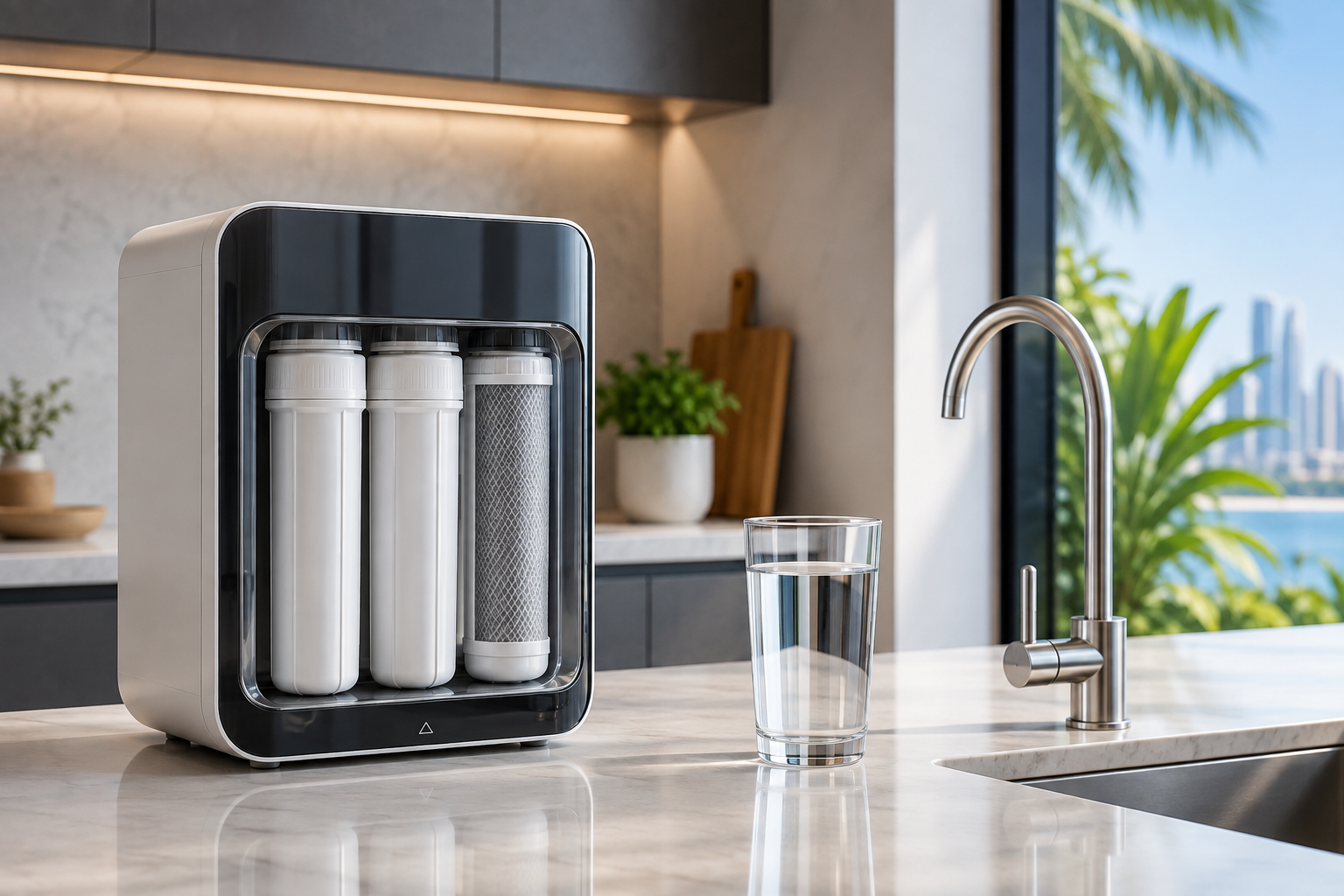
Abu Dhabi has a regulated drinking water supply, yet many households still prefer an added layer of filtration at home. The reason is not simply about the municipal supply, but also what happens after water enters a building. From storage tanks to household pipes, several factors can affect its final taste and quality. Here, we explore why a water purifier in Abu Dhabi can be a practical choice for everyday drinking and cooking needs.
Is Tap Water Safe to Drink in Abu Dhabi?
Yes, Abu Dhabi’s municipal drinking water is regulated and supplied according to established quality requirements. However, the water reaching your glass may pass through building tanks, internal pipes, and household plumbing first. For families with children, frequent cooking, and high daily water consumption, many parents prefer an additional filtration step at home. A water purifier in Abu Dhabi can provide point of use treatment for concerns such as taste, odour, sediment, or specific dissolved substances, giving households greater control over the water they use for drinking and cooking.
Why Do Abu Dhabi Homes Need Water Purifiers?
Many households choose home filtration because water can be stored in tanks and travel through internal plumbing before reaching the kitchen tap. Taste, odour, visible sediment, household preferences, and a desire for convenient point of use filtration can all influence this decision.
- Storage tanks: Building tanks hold water before it reaches individual homes, making regular cleaning and maintenance important for good household water quality.
- Internal plumbing: Pipes inside buildings can influence the water’s appearance, taste, or cleanliness depending on their condition and age.
- Sediment: Small particles can sometimes become noticeable in water, particularly where storage or plumbing conditions allow sediment to accumulate.
- Taste and odour: Some households use filtration because they prefer water with less noticeable chlorine taste, odour, or other changes in flavour.
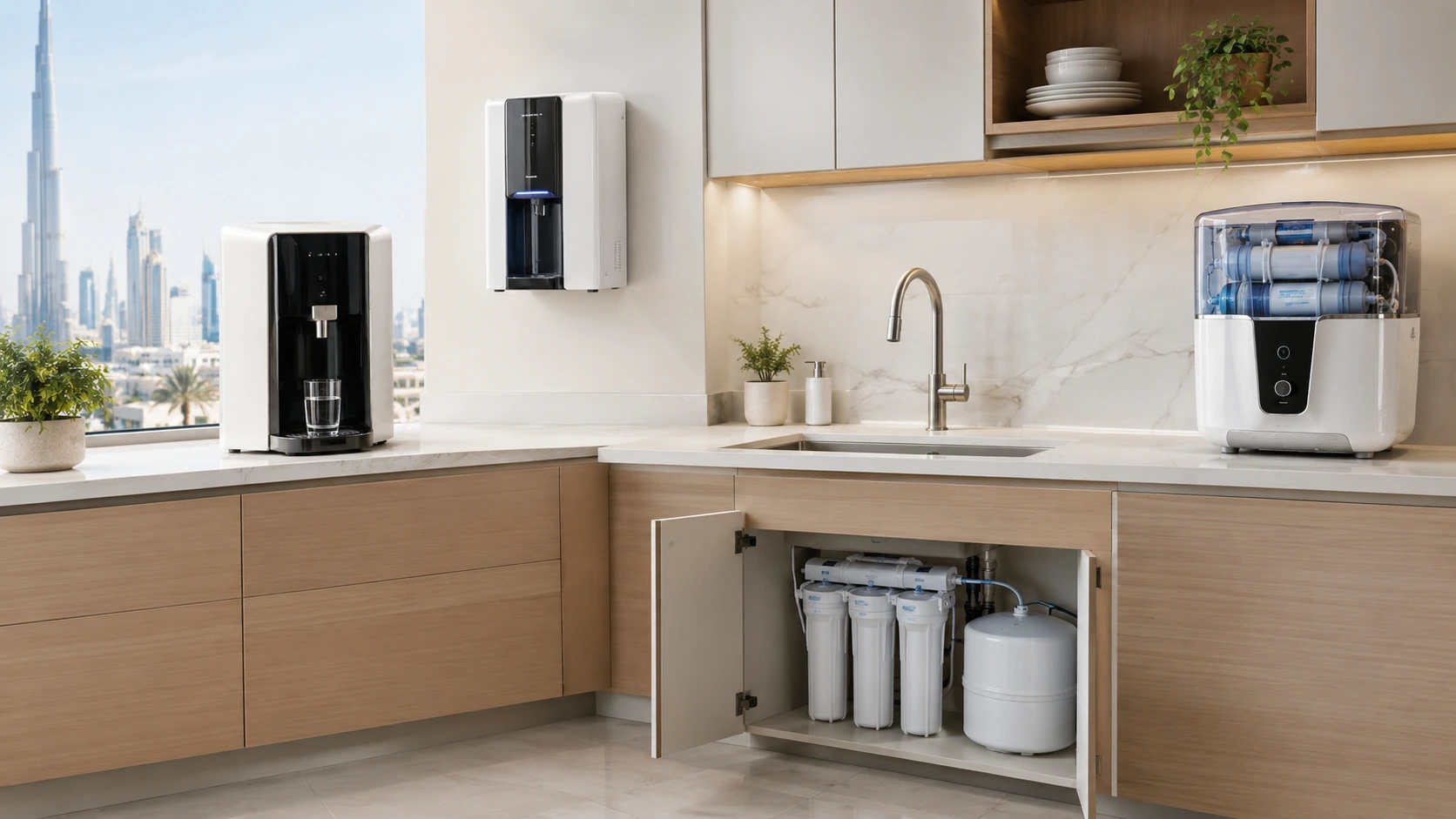
- Point of use filtration: A purifier can provide treated water directly at a kitchen outlet for drinking and cooking.
- Less bottled water: Home filtration can reduce the need to repeatedly purchase, transport, and store large bottled water containers.
How Does a Water Purifier Help Provide Cleaner Drinking Water?
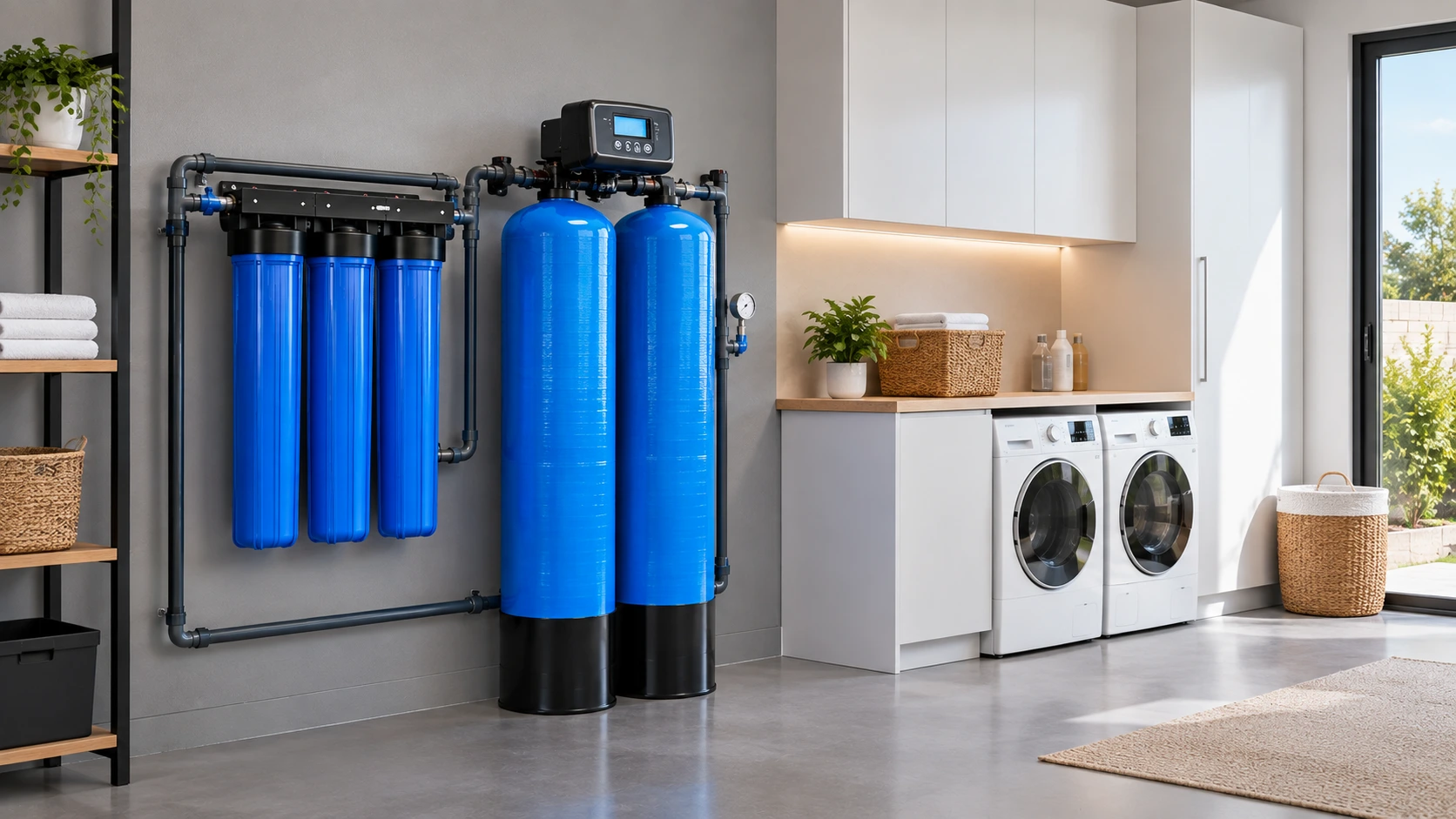
A water purifier uses one or more treatment methods to address specific water characteristics. The right combination depends on the incoming water and the performance of each filtration stage. Here is what common technologies are designed to do.
Sediment Filtration
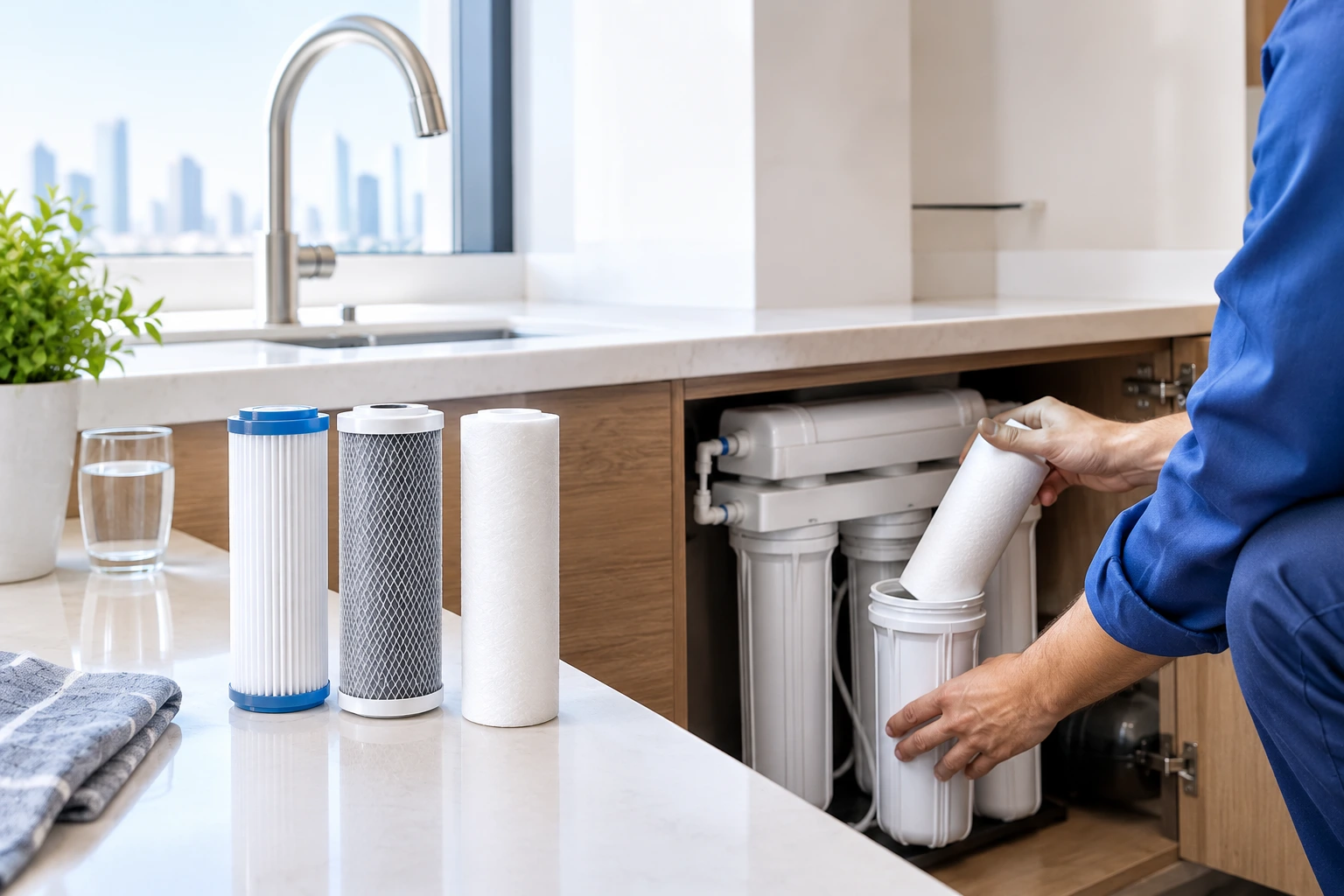
Sediment filters physically trap suspended particles from water. Depending on the filter specification, they can reduce particles such as sediment, dirt, and rust particles. They are mainly useful when visible particles or suspended matter are a concern in the incoming water.
Activated Carbon Filtration
Activated carbon filters are commonly used to improve the taste and smell of drinking water. Depending on the cartridge and its design, carbon filtration can reduce chlorine and certain compounds responsible for unpleasant taste or odour. Filter performance depends on the specific cartridge and its condition.
RO Filtration
Reverse osmosis uses a semi permeable membrane to reduce many dissolved substances from water. Depending on membrane performance and incoming water characteristics, RO can reduce dissolved salts and other substances. It is generally selected when there is a specific need for dissolved substance reduction.
UV Purification
Ultraviolet treatment uses UV light to inactivate microorganisms as water passes through the treatment chamber. Its effectiveness depends on proper system design, water conditions, UV intensity, flow rate, and maintenance. UV treatment does not remove dissolved salts or physical particles from water.
Remineralization
Some RO systems include a remineralization stage after filtration. This stage can add selected minerals back into treated water and may also modify its taste. Whether remineralization is useful depends on the treatment system, incoming water, and the household’s preference for treated water.
RO vs UV vs Carbon Filters: Which Is Right for Your Home?
Different filtration technologies are designed for different water treatment needs. Sediment and carbon filters mainly address particles, taste, odour, and chlorine, while RO targets many dissolved substances and UV focuses on microbial inactivation. The appropriate system depends on your water characteristics and household requirements.
| Technology | Main Purpose | Best Suited For |
| Sediment | Particle reduction | Sediment and rust concerns |
| Carbon | Taste, odour and chlorine reduction | Improving taste and odour |
| RO | Reducing dissolved substances | Specific dissolved substance concerns |
| UV | Microbial inactivation | Microbiological treatment |
| UF | Physical filtration | Particle and microbial barrier, depending on membrane |
| Remineralization | Adds minerals after treatment | RO systems where desired |
There is no single best purification technology for every Abu Dhabi home. A suitable system depends on the incoming water, household requirements, intended use, and the specific treatment needed.
When Should You Consider a Water Filter or Purifier?
A purifier is a personal household choice, not an automatic requirement for every home in Abu Dhabi. Consider your water characteristics, building conditions, drinking preferences, and whether you want dedicated filtered water.
- Unpleasant taste or smell: Consider filtration if your drinking water has a noticeable taste or odour that you want to reduce.
- Visible particles: Sediment or particles in the water may indicate a need to check the tank, plumbing, and filtration requirements.
- Uncertain tank maintenance: If you are unsure when the building’s water tank was last cleaned, check its maintenance status and consider appropriate filtration.
- Drinking and cooking: A point of use purifier can provide treated water specifically for drinking and food preparation.
- Less bottled water: Filtration can be convenient for households that want to reduce repeated bottled water purchases.
- Water testing results: If testing identifies a specific water treatment requirement, select a purifier designed to address that particular issue.
Filtered Water vs Bottled Water in Abu Dhabi
Both filtered and bottled water can be practical choices, but they work differently for everyday households. Your decision can depend on convenience, storage space, taste preferences, recurring purchases, plastic use, filtration control, and willingness to maintain a purifier.
| Factor | Filtered Water | Bottled Water |
| Daily access | Filtered water available whenever needed | Depends on having bottles at home |
| Storage burden | One compact system | Large bottles need considerable storage |
| Regular supply | No repeated ordering for daily use | Regular ordering and delivery required |
| Household usage | Convenient for frequent drinking and cooking | Higher usage means more bottles to manage |
| Taste control | Filtration can target chlorine, odour, or other concerns | Taste depends on the selected brand |
| Treatment control | Choose technology based on water needs | Treatment is predetermined by supplier |
| Waste | Less dependence on single use packaging | Continuous bottle and packaging waste |
| Maintenance | Requires filter changes and servicing | Requires proper bottle storage and handling |
| Long term planning | Track filters and service requirements | Plan recurring purchases and deliveries |
How to Choose a Water Purifier for Your Abu Dhabi Home
Choosing a purifier should start with your actual water needs rather than the number of filtration stages alone. Check your home setup, water characteristics, installation requirements, maintenance costs, and the performance claims of the system.
- Check the incoming water or have it tested before selecting a suitable treatment technology.
- Consider whether you live in an apartment or villa, as storage, plumbing, and installation requirements can differ.
- Check when the building water tank was last cleaned and whether it receives regular maintenance.
- Decide whether you need filtered water for drinking and cooking or treatment across multiple household outlets.
- Identify the specific water characteristics or substances you want the purifier to address.
- Select a suitable technology, such as sediment, carbon, RO, UV, UF, or a combination of these options.
- Compare ongoing costs, including filter replacements, servicing, electricity or water requirements, and other maintenance expenses.
- Check the installation requirements and ensure you have suitable space, connections, drainage, and electrical access where needed.
- Review warranty coverage, servicing options, filter availability, and after sales support before making your choice.
- Check independently verified performance information where available, particularly for claims about reducing specific substances or contaminants.
Making the Right Choice for Cleaner Drinking Water
Choosing a water purifier in Abu Dhabi is ultimately about deciding how you want to manage drinking water at home. Start with the quality of the incoming water, the condition of your building’s tank and plumbing, and your household’s daily needs. If additional filtration is useful, choose a system designed for the specific water characteristics you need to address. This approach helps you make a practical choice without assuming that every home requires the same level of treatment.
FAQs
Do I need a water purifier in Abu Dhabi?
Not necessarily. Abu Dhabi’s municipal water is regulated, but households may choose a purifier for taste, odour, sediment, specific water treatment needs, or added point of use filtration for drinking and cooking.
Is filtered tap water better than bottled water?
Neither is automatically better for every household. Filtered water offers convenient point of use treatment, while bottled water requires storage and regular purchases. Your choice depends on taste, convenience, cost, maintenance, and household preferences.
Which water purifier is best for Abu Dhabi homes?
The best purifier depends on your incoming water and treatment needs. Carbon can address taste and chlorine, RO can reduce many dissolved substances, and UV can inactivate microorganisms when properly designed and maintained.
Is an RO water purifier necessary in Abu Dhabi?
RO is not automatically necessary for every home. It is generally considered when there is a specific need to reduce dissolved substances or salts. Water testing and incoming water characteristics can help determine whether RO is appropriate.
Is UV or RO better for drinking water?
They serve different purposes, so one is not universally better. RO reduces many dissolved substances, while UV is designed to inactivate microorganisms. The suitable option depends on the water characteristics and treatment requirement of your home.
Does a water purifier remove chlorine?
Some water purifiers can reduce chlorine, particularly systems using suitable activated carbon cartridges. However, performance varies by cartridge design, water conditions, usage, and maintenance, so check the manufacturer’s specific chlorine reduction claims.
Does RO remove minerals from water?
Yes, RO can reduce many dissolved minerals along with other dissolved substances. Some RO systems include a remineralization stage afterward to add selected minerals back into the treated water and modify its taste.