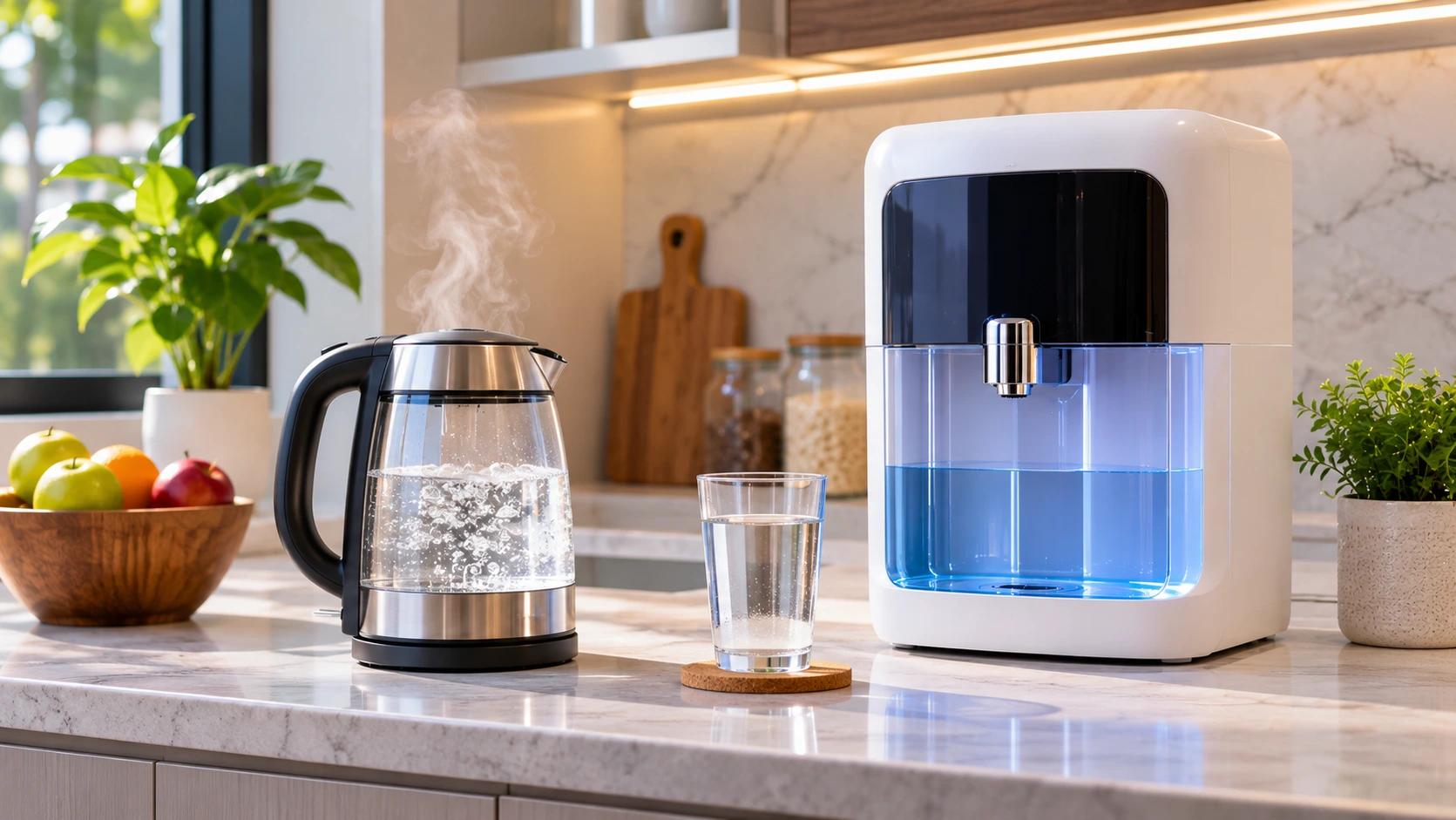
Boiling tap water is a common way to make drinking water safer, but is it enough to address every water quality concern? While boiling helps inactivate many harmful microorganisms, it does not remove dissolved salts, heavy metals or many chemical contaminants. For households in Abu Dhabi, understanding the difference between boiling and water purification can help in choosing the right approach to drinking water.
A suitable water purifier in Abu Dhabi can provide additional treatment based on the quality of the water and the household’s needs. This guide explains what boiling can and cannot do, how water purifiers work, and what to consider when comparing the water purifier price in UAE.
What Does Boiling Tap Water Actually Do?
Boiling is one of the simplest ways to treat drinking water at home. It uses heat to reduce microbiological risks, making water safer when harmful microorganisms are a concern. However, boiling does not address every type of water contamination. Understanding its benefits and limitations helps explain why some households consider a water purifier in Abu Dhabi for additional treatment.
How Boiling Helps Make Water Safer
Bringing water to a rolling boil helps inactivate many disease-causing microorganisms, including bacteria, viruses and parasites. Heat damages these microorganisms, reducing their ability to cause illness.
For water that may contain harmful germs, boiling is an effective household treatment when done correctly. The water should reach a rolling boil, and if needed, be allowed to cool in a clean, covered container before drinking.
However, boiling is primarily a microbiological treatment. It does not remove dissolved substances or address every possible water quality concern.
What Boiling Cannot Remove
Although boiling helps reduce the risk of microbial contamination, it does not remove dissolved salts, minerals or many chemical contaminants from water. Substances such as certain heavy metals and dissolved solids can remain in the water even after it has been boiled.
Boiling also causes some water to evaporate. As the water volume decreases, certain dissolved substances can become more concentrated. This means boiling alone may not improve the taste, mineral content or chemical quality of drinking water.
For households concerned about dissolved impurities, a suitable water purifier in Abu Dhabi may offer additional treatment. Technologies such as reverse osmosis (RO) can reduce many dissolved substances, depending on the system and the quality of the incoming water. The right purification method should be selected based on actual water quality rather than relying on boiling alone.
Is Boiling Tap Water Enough in Abu Dhabi?
Abu Dhabi has a treated municipal water supply, but water quality at the household tap can also depend on building storage tanks and plumbing conditions. While boiling helps inactivate harmful microorganisms, it does not remove dissolved salts, metals or many chemical contaminants.
Here are some factors that can affect household water quality:
- Municipal water supply: Water undergoes treatment before distribution, but its quality can change during storage and distribution.
- Building storage tanks: Poor maintenance or contamination in storage tanks can affect water quality.
- Household plumbing: Old or poorly maintained pipes can introduce rust, sediment and other particles.
- Dissolved impurities: Salts, minerals and certain chemical contaminants are not removed by boiling.
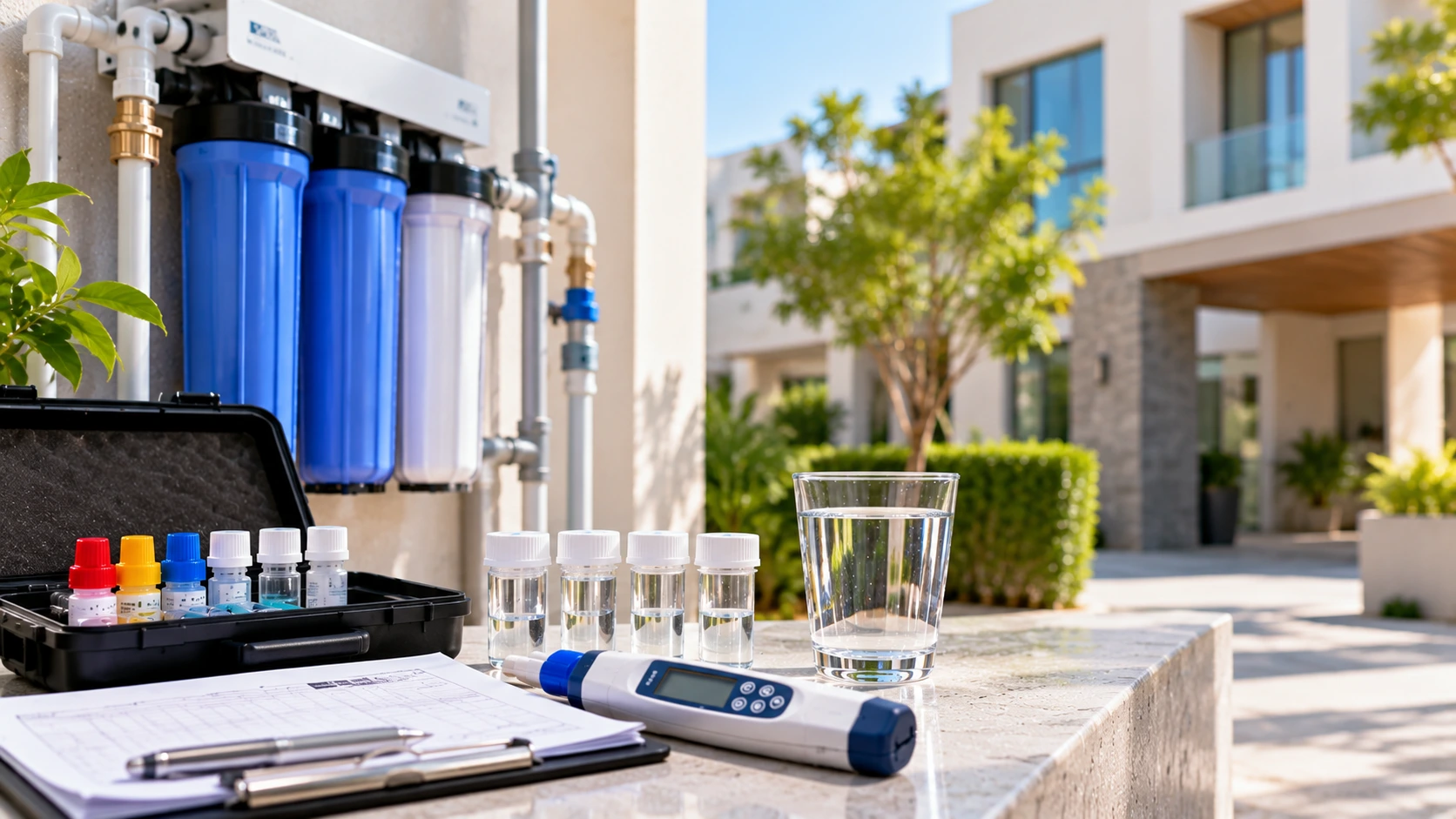
- Water quality testing: Testing helps identify impurities and determine the appropriate treatment method.
A suitable water purifier in Abu Dhabi can provide additional treatment based on household water quality. Depending on the need, technologies such as RO, UV and activated carbon filtration can address different water quality concerns.
How Does a Water Purifier Work?
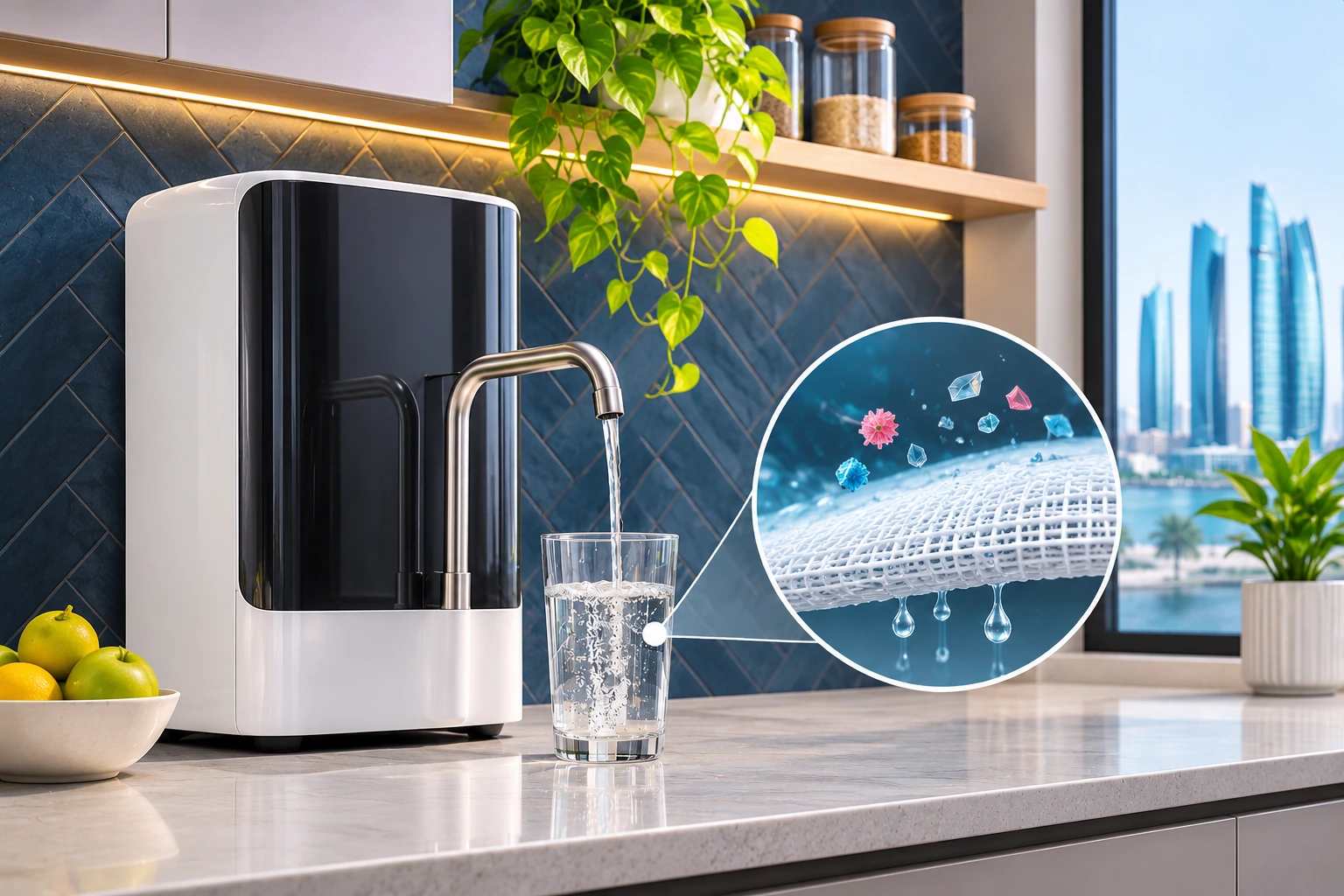
A water purifier uses different filtration technologies to reduce impurities and improve drinking water quality. Depending on the system, it can target suspended particles, substances affecting taste and odour, dissolved impurities and harmful microorganisms.
Sediment Filters for Particles
Sediment filters trap physical particles such as sand, rust, dirt and suspended matter. They act as an initial filtration stage, preventing larger particles from reaching other filters.
Activated Carbon Filters for Taste and Odour
Activated carbon filters reduce chlorine and certain organic compounds that can affect water taste and smell. This helps improve the overall drinking experience.
RO Water Purifiers for Dissolved Impurities
Reverse osmosis (RO) uses a semi-permeable membrane to reduce dissolved salts, minerals and other impurities. It is particularly useful when water contains elevated levels of total dissolved solids (TDS).
UV Water Purifiers for Microbial Treatment
UV purification uses ultraviolet light to inactivate susceptible bacteria, viruses and other microorganisms. Its effectiveness depends on proper system design, water clarity and regular maintenance.
Boiling Water vs Water Purifiers: Which Is Better?
Boiling water and using a water purifier serve different purposes. Boiling is an effective way to inactivate many disease-causing microorganisms, but it does not remove dissolved salts, chemical contaminants or sediment. A water purifier, on the other hand, uses specific filtration technologies to address different water quality concerns. The following comparison highlights how both methods differ and why choosing a suitable water purifier in Abu Dhabi depends on your household’s water quality needs.
| Feature | Boiling Water | Water Purifier |
| Helps inactivate many microorganisms | Yes | Depends on technology |
| Reduces dissolved salts | No | RO systems can |
| Improves taste and odour | Not necessarily | Certain filters can |
| Removes sediment | No | Sediment filters can |
| Requires daily heating | Yes | Usually no |
| Treats different water quality concerns | Limited | Depends on filter type |
Which Water Purifier Is Suitable for Homes in Abu Dhabi?
Choosing a water purifier depends on the quality of your household water and the impurities you want to address. Different purification technologies target different contaminants, so consider the following options before selecting a water purifier in Abu Dhabi.
RO Water Purifiers for Dissolved Solids
RO water purifiers are suitable for water with elevated levels of dissolved salts and other impurities. They use a semi-permeable membrane to reduce total dissolved solids (TDS). Checking your water quality before choosing an RO system helps determine whether this technology is necessary.
UV Water Purifiers for Microbial Concerns
UV water purifiers use ultraviolet light to inactivate susceptible bacteria, viruses and other microorganisms. They can be useful when microbial contamination is a concern, provided the system is properly maintained and used with suitably clear water.
Multi-Stage Water Purifiers for Different Water Concerns
Multi-stage water purifiers combine technologies such as sediment filtration, activated carbon, RO and UV treatment. These systems can address multiple water quality concerns in one unit. However, the right choice depends on your water test results and household requirements, not simply the number of filtration stages.
What Affects Water Purifier Price in UAE?
The water purifier price in UAE depends on the purification technology, features and maintenance requirements of each model. Before purchasing a water purifier, consider the following factors:
- Purification technology: RO, UV and multi-stage water purifiers have different features and treatment capabilities, which influence their prices.
- Filter and membrane quality: The quality and durability of filters and RO membranes can affect the overall cost.
- Storage tank capacity: Models with larger storage tanks may have different pricing depending on their capacity and design.
- Installation requirements: Installation complexity and additional fittings can influence the total purchase cost.
- Filter replacement and maintenance: Consider the price and replacement frequency of filters and membranes when estimating long-term expenses.
- Brand and after-sales service: Warranty coverage, servicing support and spare part availability are also important considerations.
Overall, the water purifier price in UAE varies by model, purification features, capacity and installation requirements. Compare both the initial purchase price and ongoing maintenance costs to find a suitable option for your household.
How to Choose the Best Water Purifier in Abu Dhabi
Choosing the best water purifier in Abu Dhabi starts with understanding your household water quality and daily drinking water needs. Consider these factors before making a purchase:
- Check water quality: Test your water to identify dissolved solids, suspended particles and possible microbial contamination.
- Identify your main concern: Determine whether you need to address dissolved salts, sediment, unpleasant taste and odour, or microbial risks.
- Compare purification technologies: Choose between RO, UV, activated carbon or multi-stage filtration based on your water quality.
- Check maintenance requirements: Review filter replacement schedules and membrane maintenance costs.
- Consider daily usage: Select a purifier with suitable capacity for your household size and drinking water consumption.
- Look for reliable service: Check warranty coverage, spare part availability and after-sales support.
Choose a Suitable Water Purifier with Aquaguard Abu Dhabi
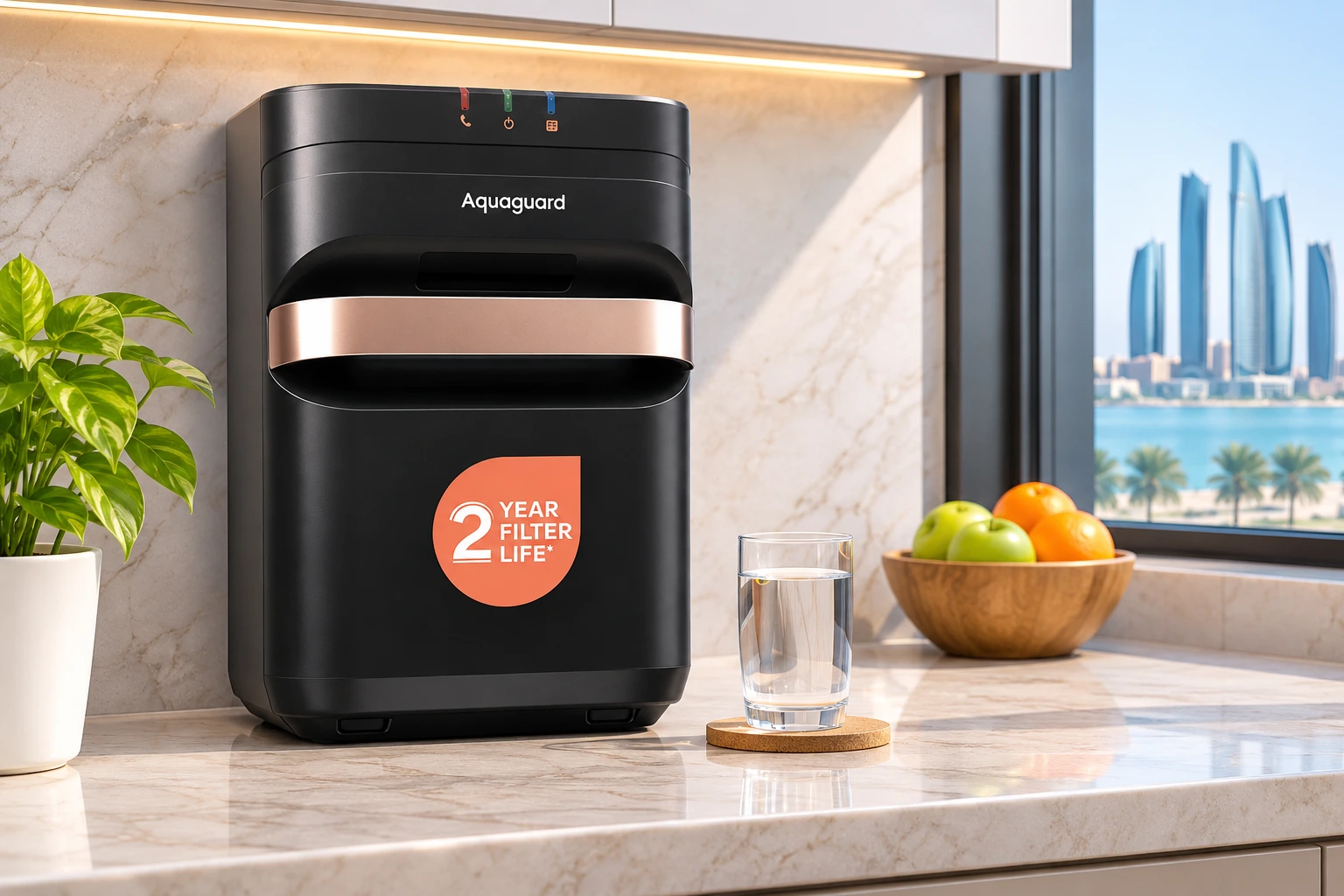
Choosing the right water purifier helps address your household’s drinking water needs with suitable filtration technology. Explore the range of water purification solutions from Aquaguard Abu Dhabi to compare models, filtration features, storage capacity and maintenance requirements. Whether you are considering RO, UV or multi-stage purification, understanding the available options can help you make an informed choice.
Contact Aquaguard Abu Dhabi to explore suitable water purifiers for your home, learn about their features and maintenance requirements, and enquire about the water purifier price in UAE. Find a solution that fits your household’s drinking water needs and budget.