Water quality affects far more than what you drink. It influences cooking, bathing, skin and hair, while the quality reaching your tap can also be affected by desalinated municipal water, building storage tanks and internal plumbing. Choosing the right water filter or water purifier in Abu Dhabi can help address specific household water quality concerns. But how do you know what your water actually needs? Read on to understand Abu Dhabi water quality standards, common concerns and the most suitable treatment options for your home.
Water Quality and Its Impact on Everyday Well Being
Digestive Health and Water Quality
Poor water quality can introduce pathogens such as E. coli, Giardia and other microorganisms that cause gastrointestinal infections. Contaminated water can lead to diarrhoea, vomiting and abdominal discomfort. Chemical contaminants such as lead and nitrates can also pose health risks when exposure occurs over time.
Effects on Skin Health
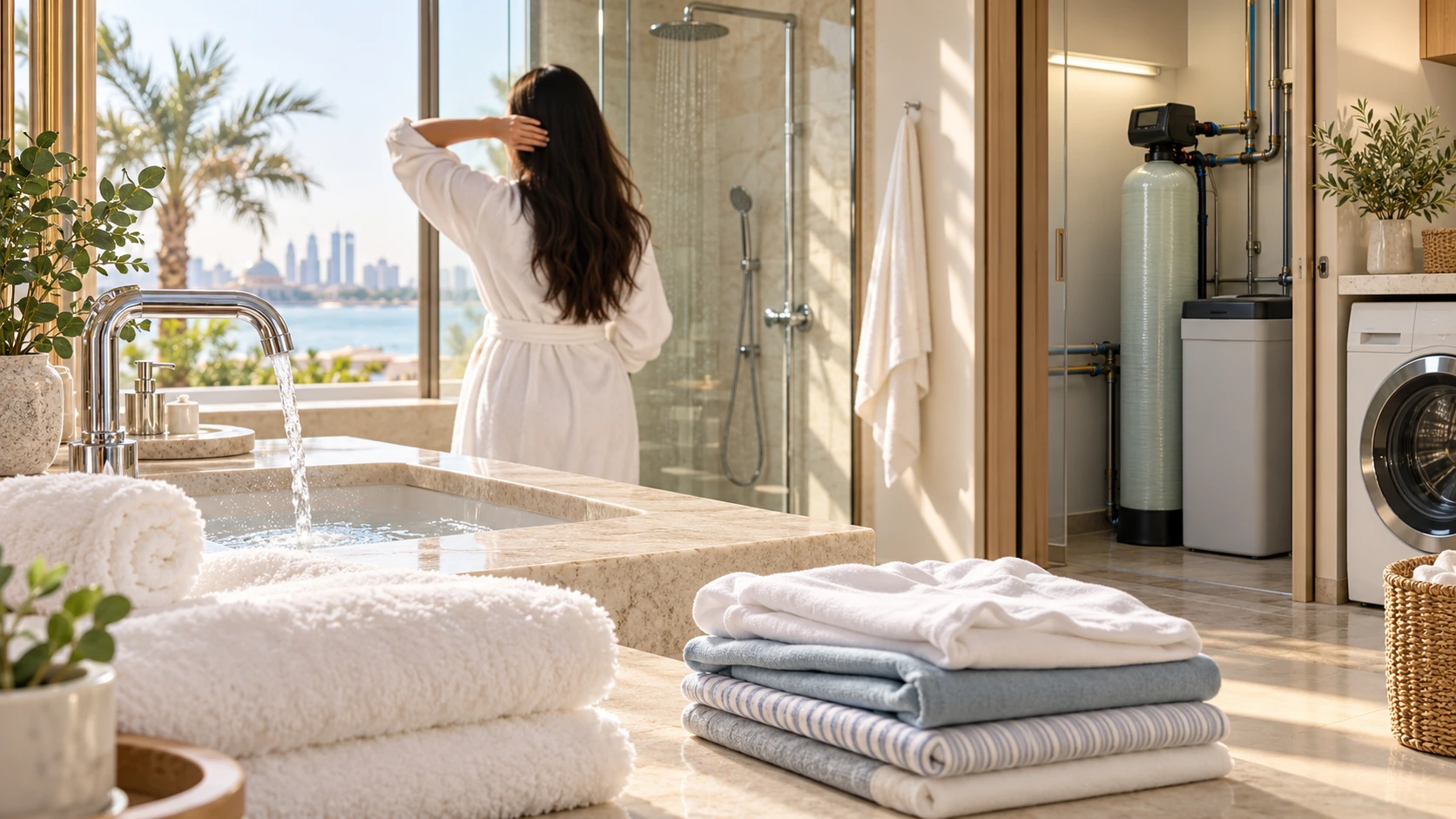
Poor water quality can affect the skin barrier through exposure to chlorine, hardness minerals and other irritants. Hard water can leave mineral residue on the skin, while chlorine can contribute to dryness and irritation. These effects can be more noticeable in people with sensitive skin or eczema.
Effects on Hair Health
Hard water and chlorine can leave mineral deposits on hair, strip natural oils and contribute to dryness, brittleness and rough texture. Poor water quality can make hair harder to manage and increase breakage. However, water quality should not be presented as a direct cause of hair loss.
Hydration and Drinking Water Quality
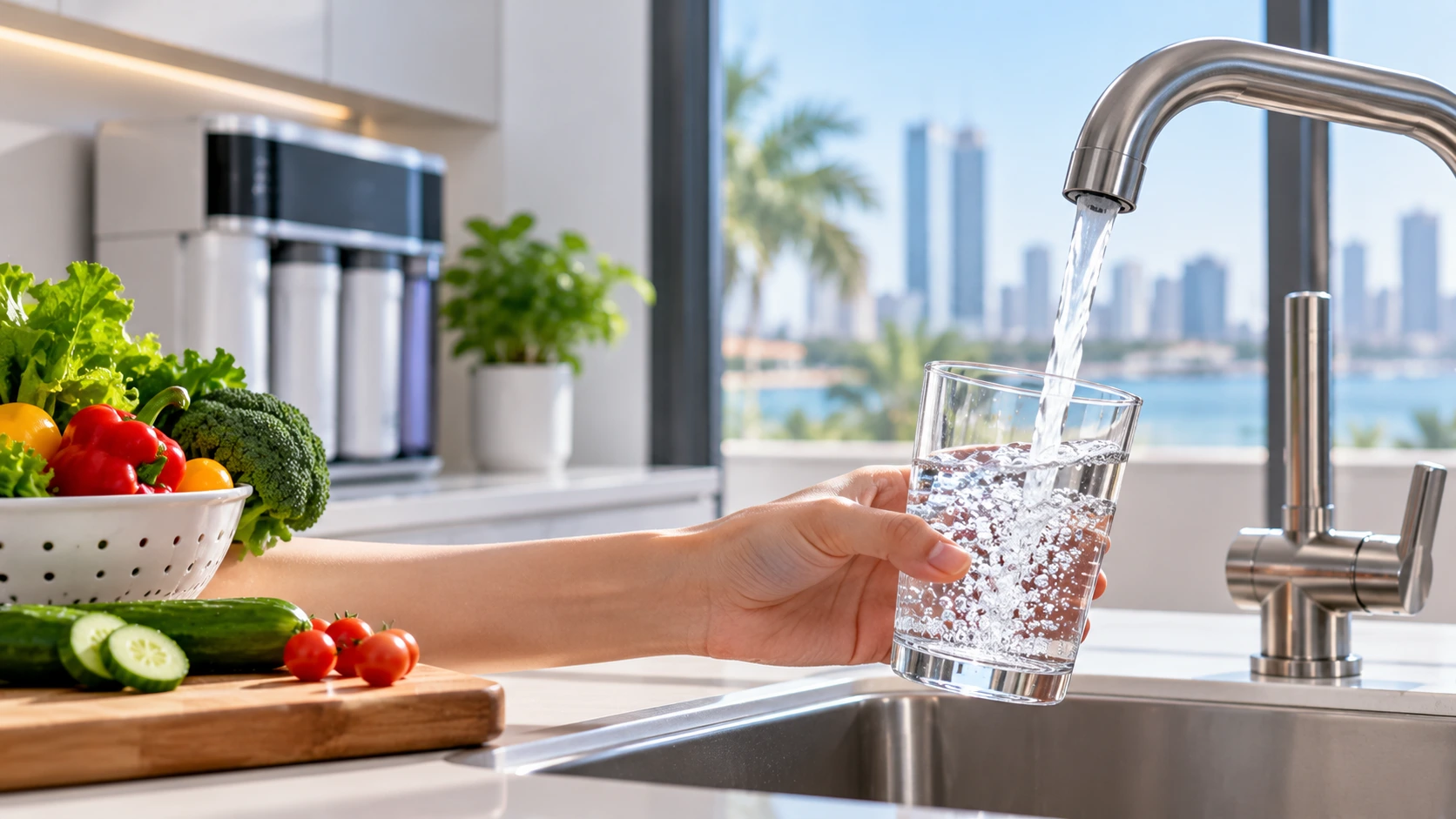
Safe, clean and good tasting water encourages regular water consumption, which is particularly important in Abu Dhabi’s hot climate. Water contaminated with harmful microorganisms or chemicals is unsafe to consume. Unpleasant taste or odour can also discourage adequate intake and affect everyday hydration habits.
Overall Comfort and Well Being
Water quality affects more than drinking. It influences cooking, beverages, bathing and other daily routines. Unpleasant taste, odour, excessive hardness or visible particles can reduce household comfort. Consistently clean and appropriately treated water provides better tasting drinking water and a more comfortable everyday water experience.
What Is Considered Good Water Quality in Abu Dhabi?
Good drinking water quality in Abu Dhabi is governed by the Department of Energy (DoE) Water Quality Regulations, which align closely with international drinking-water guidelines. Key parameters include pH, TDS, hardness and residual chlorine.
pH Level: Drinking water should have a pH between 6.5 and 8.5, indicating a balanced level that is neither excessively acidic nor alkaline.
Total Dissolved Solids (TDS): TDS levels at the tap are typically around 110–300 ppm, while applicable regulatory limits can reach 600–1,000 mg/L depending on the standard.
Total Hardness: Water hardness is generally permitted up to 300–500 mg/L as calcium carbonate (CaCO₃), depending on the applicable requirement.
Residual Chlorine: Treated drinking water typically maintains 0.2–0.5 mg/L of residual chlorine to control microbial growth, with limits reaching up to 1.0 mg/L under applicable standards.
What Happens If Your Water Quality Is Poor?
Poor household water quality can affect more than drinking water. High hardness can cause limescale on taps, showerheads and appliances, while chlorine can contribute to dry skin, rough hair and unpleasant taste or odour. Sediment from storage tanks or plumbing can affect water clarity and clog fixtures. More serious contamination, including microorganisms or certain chemical contaminants, can create health risks. Identifying the specific water-quality issue through testing helps determine whether filtration, purification, softening or another treatment is appropriate.
How to Improve Water Quality in Abu Dhabi Homes
To improve water quality, you can choose suitable water treatment systems such as water purifiers or water filters in Abu Dhabi based on your household needs, water quality concerns and intended use.
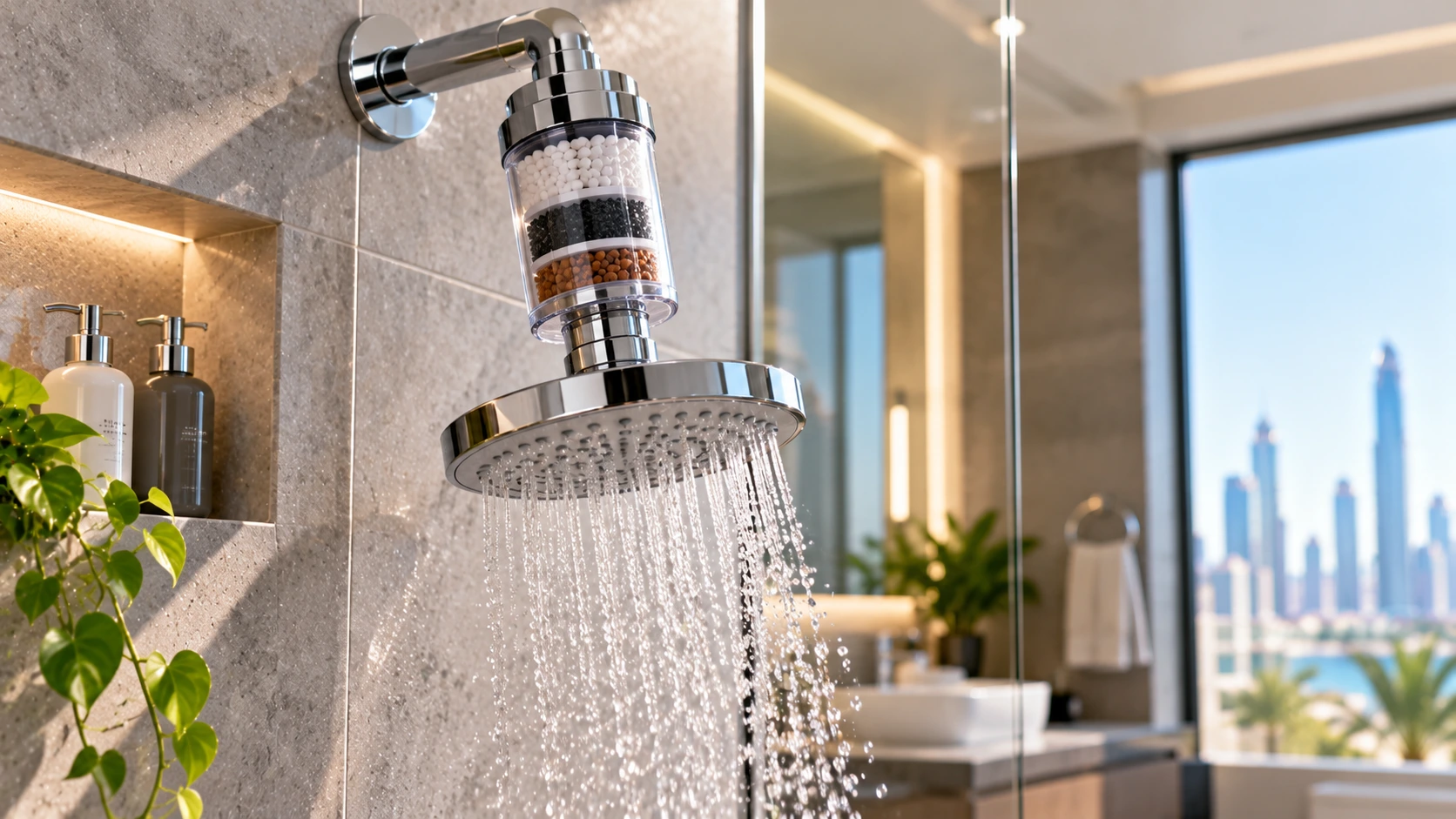
• Use a shower filter to reduce residual chlorine and certain impurities in shower water that can contribute to dry skin and rough hair.
• Use a sediment filter to capture sand, rust and suspended particles that can enter household water through storage tanks and plumbing.
• Use an activated carbon filter to reduce chlorine, unpleasant taste and odour in drinking and household water.
• Choose an RO + UV purifier to reduce dissolved salts and selected contaminants while using UV treatment to help control microorganisms.
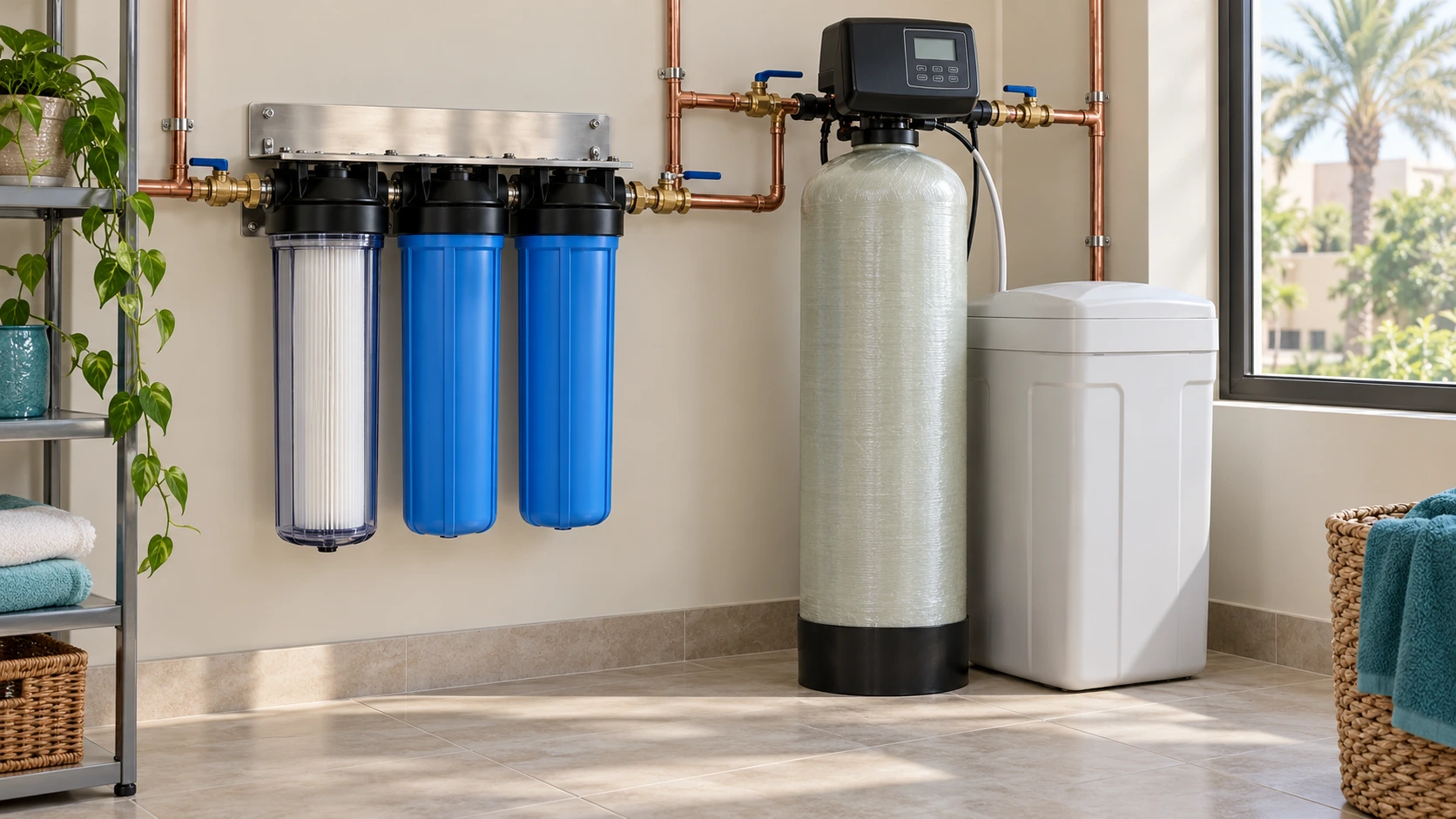
• Use a water softener when high hardness causes limescale buildup on taps, appliances and plumbing or affects the feel of water on skin and hair.
• Install a whole house filtration system at the main water inlet to treat water supplied to kitchens, bathrooms, showers and other outlets.
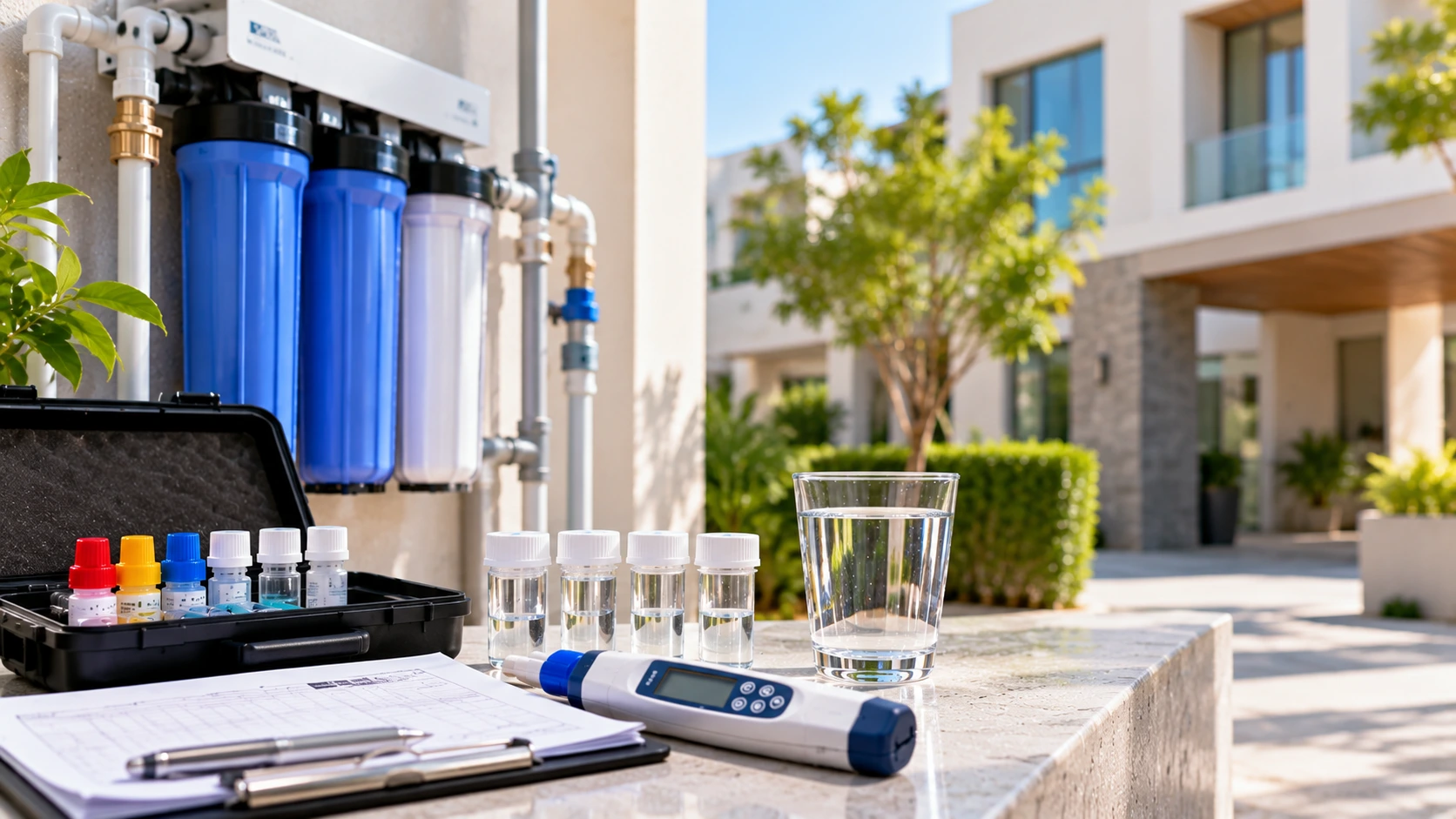
• Test TDS, hardness, chlorine, turbidity and microbiological parameters to identify the actual water quality issue and select the appropriate treatment.
Water Purifier vs Water Filter in Abu Dhabi: What Should You Choose?
| Your Water Concern or Requirement | What Should You Choose? | Why |
| Chlorine, taste and odour | Activated carbon water filter | Reduces chlorine, unpleasant taste and odour |
| Sand, rust and suspended particles | Sediment water filter | Captures physical particles before they reach taps |
| High TDS or dissolved salts | RO water purifier | Reduces dissolved salts and selected contaminants |
| Drinking and cooking water | Under sink RO purifier | Provides treated water directly at the kitchen tap |
| Microbial contamination | UV water purifier | Uses UV treatment to inactivate microorganisms |
| Hard water and limescale | Water softener | Reduces hardness that causes scale on fixtures and appliances |
| Skin and hair concerns during bathing | Shower water filter | Helps reduce chlorine and certain impurities in shower water |
| Filtration throughout a villa | Whole house water filter | Treats incoming water before it reaches multiple outlets |
| Multiple water quality concerns | Multi stage water purification system | Combines technologies according to the actual water quality |
Ensuring Better Water Quality for Better Health
Maintaining good water quality is essential for safe drinking, cooking, bathing and everyday household use. A suitable water purifier or water filter in Abu Dhabi can address concerns such as chlorine, sediment, hardness, dissolved salts and specific contaminants. RO and UV purifiers provide targeted drinking water treatment, while filters can improve taste, odour and reduce selected impurities. Regular water testing helps identify quality concerns and ensures your chosen treatment system meets your household’s actual water needs.
Looking for the Right Water Purifier in Abu Dhabi?
Choose a water purification system based on your home’s water quality, filtration needs and daily usage. Explore suitable water purifiers and filtration solutions for homes in Abu Dhabi.
Explore Water Purifiers in Abu Dhabi →
Frequently Asked Questions
Is Abu Dhabi tap water safe to drink?
Abu Dhabi regulates drinking water quality through defined limits for parameters including TDS, hardness, pH, turbidity, chlorine and microbiological contaminants. However, household water can also be affected by storage tanks and internal plumbing, so point of use testing can provide additional assurance.
Can water tanks affect the quality of drinking water in Abu Dhabi?
Yes. Water storage tanks are part of the household water pathway, and their condition, cleanliness and maintenance can affect water quality. Abu Dhabi’s regulations specifically include requirements and codes covering customer water storage tank inspection and cleaning.
Do I need to filter Abu Dhabi tap water before drinking?
Not every household automatically needs the same filtration system. If you are concerned about taste, odour, sediment or changes in your household water, testing the water at the point of use can help determine whether a carbon filter, sediment filter, purifier or another treatment is appropriate.
Is RO necessary for drinking water in Abu Dhabi?
RO is not automatically necessary for every home. Abu Dhabi’s 2025 water-quality regulations set a maximum TDS of 600 mg/L and require suppliers to target TDS above 100 mg/L. RO is specifically useful when testing identifies high dissolved solids or contaminants that require reverse osmosis treatment.
Does a water filter remove TDS?
A standard sediment or activated carbon filter generally does not significantly reduce TDS because TDS represents dissolved substances rather than suspended particles. Reverse osmosis is designed to reduce dissolved salts and other dissolved contaminants, so the appropriate treatment depends on what your water test identifies.
Can Abu Dhabi water cause dry skin or hair problems?
Water quality can contribute to dry skin and rough or brittle hair, particularly when chlorine or hardness minerals are present. However, water quality should not be presented as a direct cause of hair loss. A shower filter or appropriate water treatment can address specific water-quality factors contributing to dryness.
How often should water quality be tested at home in Abu Dhabi?
There is no single testing frequency suitable for every household. Testing is particularly useful when you notice changes in taste, odour, colour or sediment, after plumbing or tank maintenance, or when you are deciding whether you need a particular treatment system. Testing multiple parameters provides more useful information than checking TDS alone.